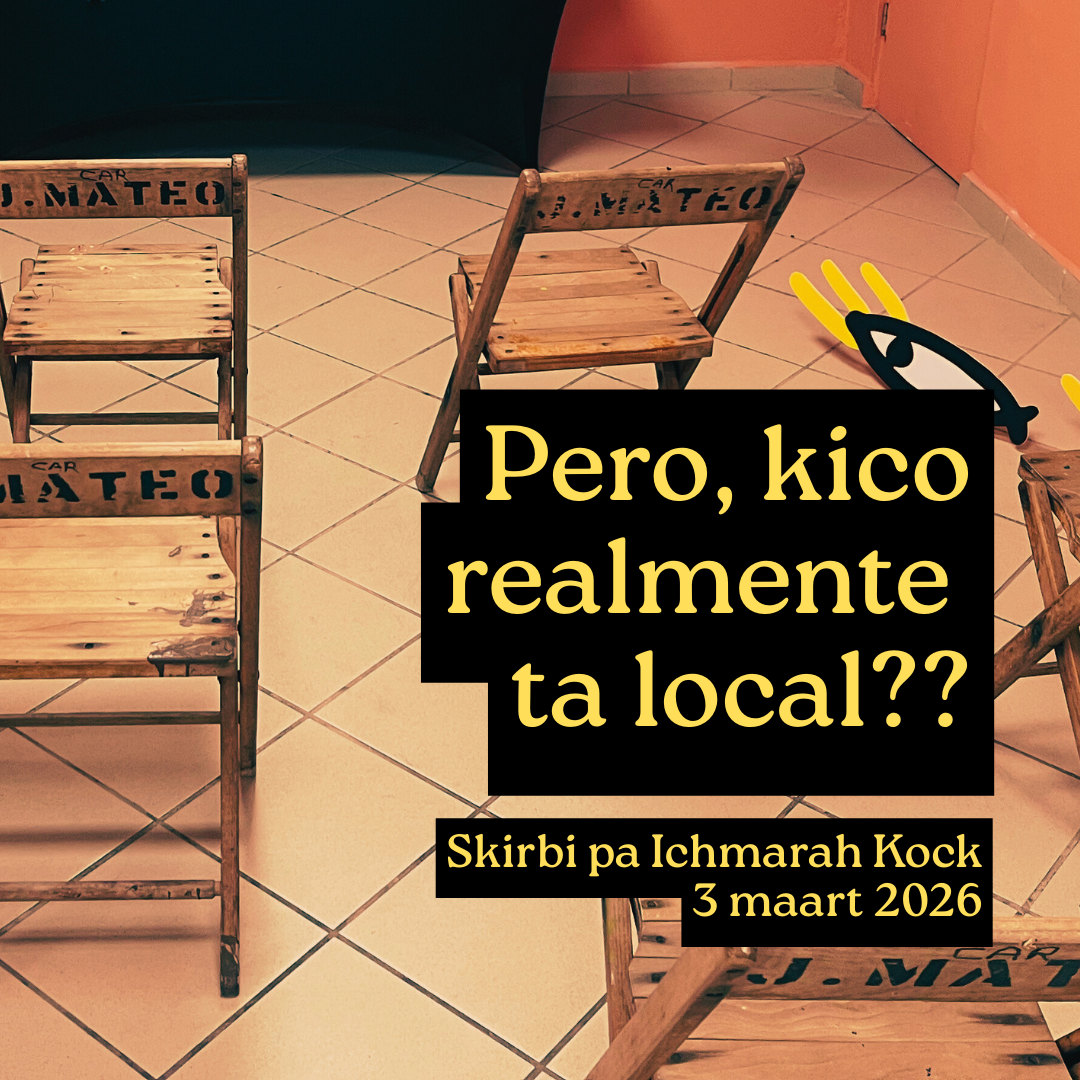
Pero, kico realmente ta local??
[English below Papiamento]
Inicialmente e reflexion aki tabata parti 1 di 2, skribi tocante e programa STUDIO 2025 na Residencia Artistico Aruba (RAA!). Lastimente, mi no a presencia e exhibicion final "Aki" den januari 2026. E andansa di griep y keintura a bati na mi porta. Pues, mi no por a skirbi parti 2 🥲
1. Un stoba di bestia chikito, 2. e mercado di Santa Rosa, 3. of e pal'i mango den mi tanta su cura. 4. Sin lubida e masbango cu mi wela tabata cumpra ora e tabata bibo, ey mes na Wan Por, den bario di Palm Beach. Desde e evenemento di Cadushi Festival cu a promove e slogan "buy local", cumpra local, mi a cuminsa para poco mas keto na e topico aki. Hopi bes mi ta asocia "local" directamente cu compra. Sinembargo, kico ta "local" mas aleu di compra, negoshi of balor monetario?
Cu curiosidad mi a atende un encuentro di un grupo di artista cu tabata explorando "kico ta local" den contexto di Aruba na november 2025. E exploracion tabata parti di e programa STUDIO 2025 na Residencia Artistico Aruba (RAA!). RAA! ta un espacio y colectivo na Aruba cu e lema "where art matters", unda arte ta haci diferencia. RAA! ta situa na Caya G.F. Betico Croes 110; scuins n'e contrario di Djiespie's Place. Durante e encuentro, e artistanan a presenta nan proceso di exploracion riba e topico di "local."
Drentando e hadrij di e edificio, Desiree di RAA! ta aserca mi y splica e concepto di e encuentro e anochi aki. Cada artista of grupo di artisto lo tin diescinco minuut pa presenta na nos, e bishitante. Lo cuminsa och'or en punto!
RUDYOMAR LEYSNER
Ora och'or a bati, Desiree ta guia nos na e prome presentacion di artista Rudyomar Leysner. Rudyomar ta sinta den un skina na banda drechi di e hadrij. Desiree ta informa nos cu no mag di papia cu e artista. Rudyomar tin algun minuut pa pinta riba un papel chikito e retrato di es cu lo sinta su dilanti riba un stoel preto di oficina riba wiel. Patras di e stoel tin un background colga den papel color bruin cla. Cu su man Rudyomar ta haci un gesto di invitacion pa mi sinta riba e stoel preto. E ta coy cu un man su disicups (Dixie cup) cu ink preto aden. Den su otro man e ta wanta un pen di ink. El a cuminsa pinta mi retrato. Pocopoco e silueta di mi cara y bril di bista ta bira visibel riba un papel blanco chikito. E background el a pinta ful preto.
Ni poco minuut despues, Desiree ta indica na Rudyomar cu su minuutnan a pasa. Rudyomar, cu sorpresa riba su cara di con liher e minuutnan a pasa, ta lanta para y pega e papel cu mi retrato na e muraya banda di e bentana di e hadrij. Awor mi cara tambe a forma parti di e otro retratonan cu el a yega di pinta y pega na e muraya. E sigiente bishitante mag di bay sinta den e stoel preto. Y asina e proceso di retrato ta bolbe cuminsa di nobo (mira Imagen 1).
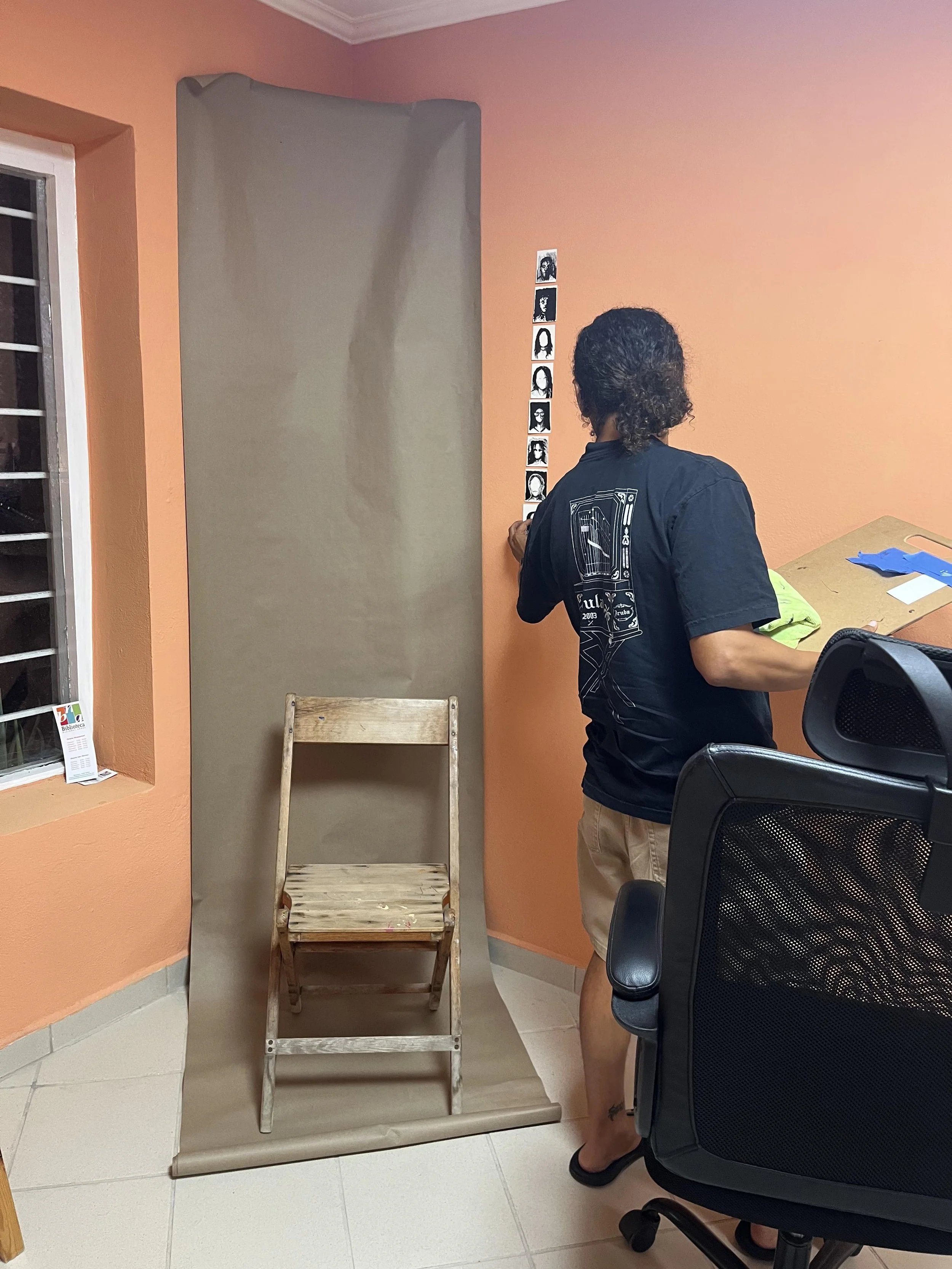
Imagen 1. Artista Rudyomar Leysner colgando un retrato cu el a caba di pinta di un bishitante na RAA! durante e presentacion RAA STUDIO 2025. Potret pa Ichmarah Kock, 20 november 2025, Oranjestad.
ENG: Artist Rudyomar Leysner at RAA! hanging up a portrait he just sketched. Photo by Ichmarah Kock, 2025, Oranjestad (Aruba).
DIMANCHE JOLIE Y SHARINA GUMBS
Diescinco minuut a pasa y nos ta wordo invita pa bay den e patio cu ta e hardin di RAA! Sigientemente, e artistanan Dimanche Jolie y Sharina Gumbs lo duna nan presentacion. Drentando e patio, por scucha un dushi soca tocando. Dimanche Jolie ta para tras di un mesa largo, bashando un likido berde poco scur den disicups. Sharina ta tuma e disicups fo'i Dimanche Jolie y ta parti esaki cu nos (mira Imagen 2).
"Bush tea" ta locual nos ta purbando. Un mescla di diferente yerbe cu a trek den awa cayente. Un hende a puntra ki yerbe a wordo usa. Pafor ta mucho cayente y humeda pa mi por concentra completo. Mi no por pone atencion ki combinacion di yerbe nan a usa. Cu cada slok di e bush tea, su smaal mi ta transporta mi pa un nostalgia di pone mi pianan den tera fresco y nurtitivo. Mishi cu yerbe, mishi cu tera... Sinembargo, na mes momento e cayente di e te, combina cu e calor y humedad den e patio di RAA!, ta sinti poco incomfortabel.
Sharina ta invita nos pa drenta den e espacio cu dak parti patras di e patio. E ta parce manera un shap di antes. Di plafond pa vloer tin diferente tela colga. Tela den diferente color, textura y patronchi. Nos a drenta un laberinto! Aunke e shap ta chikito, e artistanan a laga poco espacio patras sin tela. Aki, riba e murayanan visibel tin algun carton den color neon pega. Cada carton tin un pregunta na man skirbi cu stift preto. Nos, e bishitante, por contesta e preguntanan, skirbiendo esaki riba un post-it y peg'e na cada pregunta corespondente:
WHAT MAKES SOMEONE TRULY BELONG TO ARUBA (NOT JUST BORN HERE, BUT BELONG HERE)
CAN INDIVIDUALITY AND COMMUNITY EXIST TOGETHER? WHAT DO YOU BELIEVE?
WHEN ARUBA IS PORTRAYED IN TOURISM OR MEDIA DO WE SEE ALL OF OUR FACES?
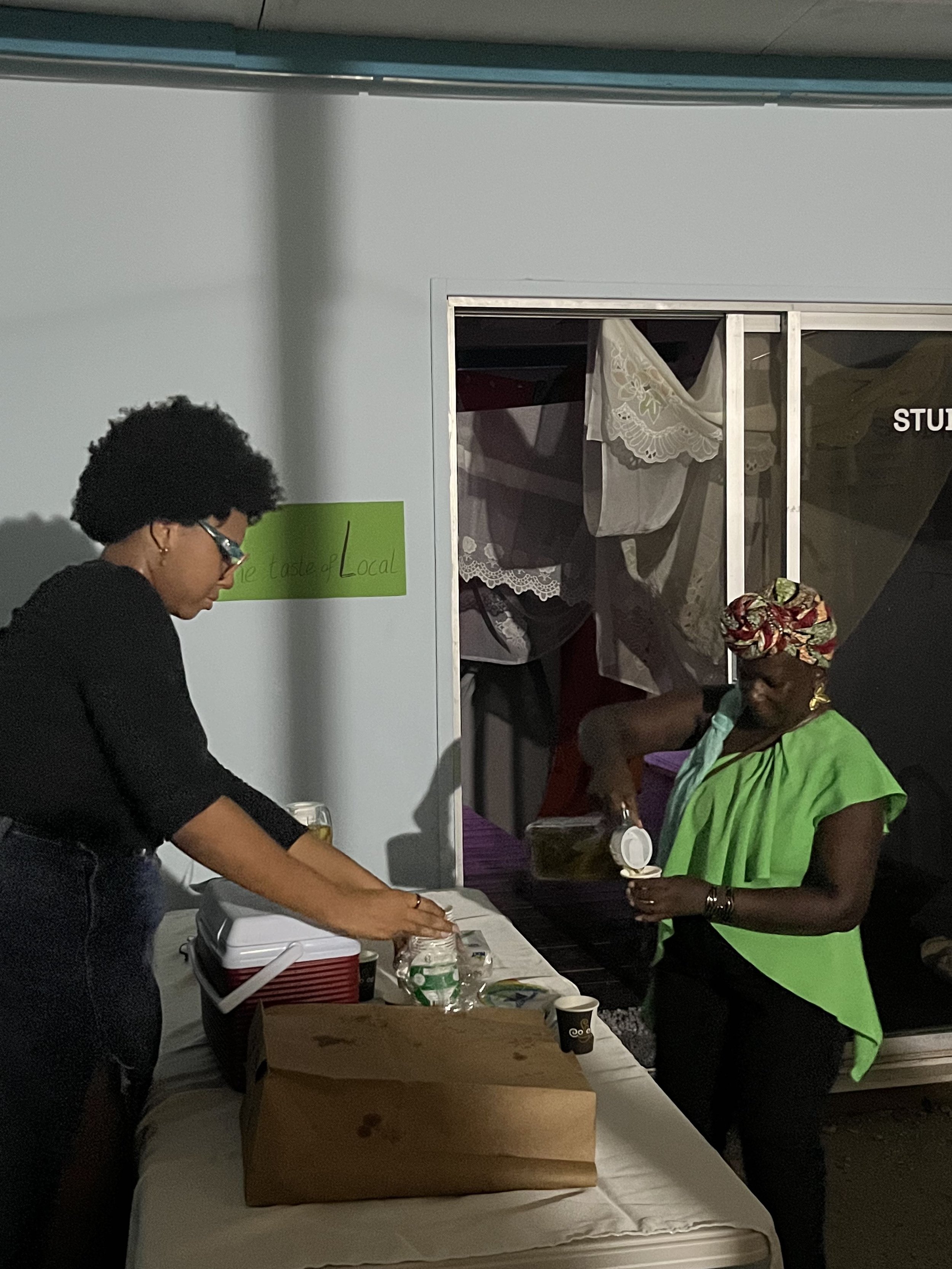
Imagen 2. Artistanan Dimanche Jolie y Sharina Gumbs sirbiendo "bush tea" durante presentacion di RAA STUDIO 2025. Potret pa Ichmarah Kock, 20 november 2025, Oranjestad.
ENG: Artists Dimanche Jolie and Sharina Gumbs serving up "bush tea" during RAA STUDIO 2025 presentation. Photo by Ichmarah Kock, 20 November 2025, Oranjestad (Aruba).
JEANELIJ (GINELLY) QUANT Y RUDBERTH WOLFF
Atrobe e diescinco minuut a pasa y nos ta wordo guia for di e laberinto bek paden. E ultimo presentacion lo ta di e artistanan Jeanelij (Ginelly) Quant y Rudberth Wolff. Via e hardin, nos ta drenta bek den e hadrij di RAA!, rumbo pa e espacio meymey di e edificio. Fo'i e plafond tin algun elementonan den estilo di comics colga na liña di pisca. E elementonan ta parce na prome instante un set di wowo. Na mes momento nan ta parce figuranan di pisca tambe! Tambe tin algun borchi cu text colga for di e plafond:
CAPTURA FORMA PARTI DI BO BARIO
WAK UNDA BO TA BAY
DI UNDA BO TA BIN COEXISTI
BUSCA CONEXION
KEN TA PAFO? MURAYA HALTO
FORMA PARTI DI BO BARIO
Serca di e muraya banda pariba tin un pantaya di television riba un mesa. E espacio ta yená cu stoel di palo cu ta klap sera (mira Imagen 3). Nos ta tuma asiento. E artistanan ta introduci nan mes, siguí pa e demostracion di e video cu nan a traha. Den e video nos ta sigui e dos artistanan, canando den bario di Palm Beach. Rudberth a crece den e bario. Ginelly no. Nan dos ta combersa y refleha tocante desbentahanan cu e gran cantidad di turismo a trece pa Aruba. Hopi habitante di antes di Palm Beach a ser reemplasa pa e bishitante temporal, e turista.
Ginelly ta nota e cura di e casnan den bario: antes bo por a wak e caya desde paden di bo cas, bo por a wak bo bisiña y haci combersacion cu otro. E curanan ta trahá asina halto cu awor bo ni ta wak e cas mes mas. Pa Rudberth, ta un caya so ta representa esnan di Palm Beach prome cu el a cambia drasticamente. Esey ta e caya unda e casnan ta colorido ainda. Unda e piscado di Palm Beach, Wan Por, ta bende su pisca bou palo. Un fragmento di e video ta mustra e borchi di Wan Por bou palo cu letter grandi skirbi "NO TIN PISCA". Rudberth ta splica den e video cu e borchi ta locual ta haci e bario netamente e bario di Palm Beach: e habitantenan, cu nan raiz ancra den e bario. Nan a forma e bario pa añanan largo.
Na final di e video, nos por a haci pregunta n'e artistanan y bay den discusion cu otro. Despues di e video y e combersacionnan, e ambiente ta sinti un poco emocional, un sentido di perdida di locual ta di nos Aruba.
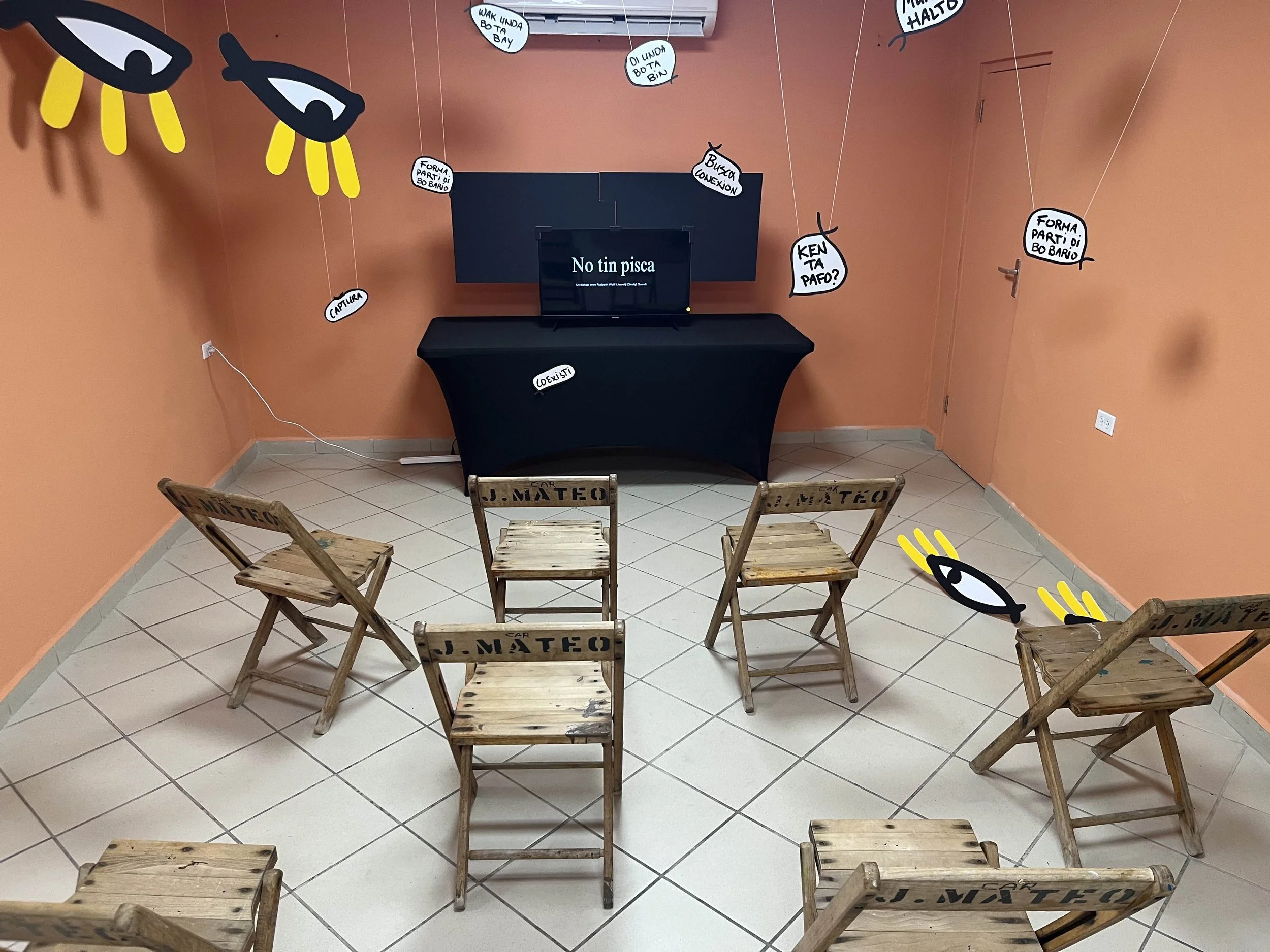
Imagen 3. E set up di e presentacion pa e artistanan Jeanelij (Ginelly) Quant y Rudberth Wolff durante presentacion di RAA STUDIO 2025. Potret pa Ichmarah Kock, 20 november 2025, Oranjestad.
ENG: Presentation set up by artists Jeanelij (Ginelly) Quant and Rudberth Wolff at RAA STUDIO 2025. Photo by Ichmarah Kock, 20 November 2025, Oranjestad (Aruba).
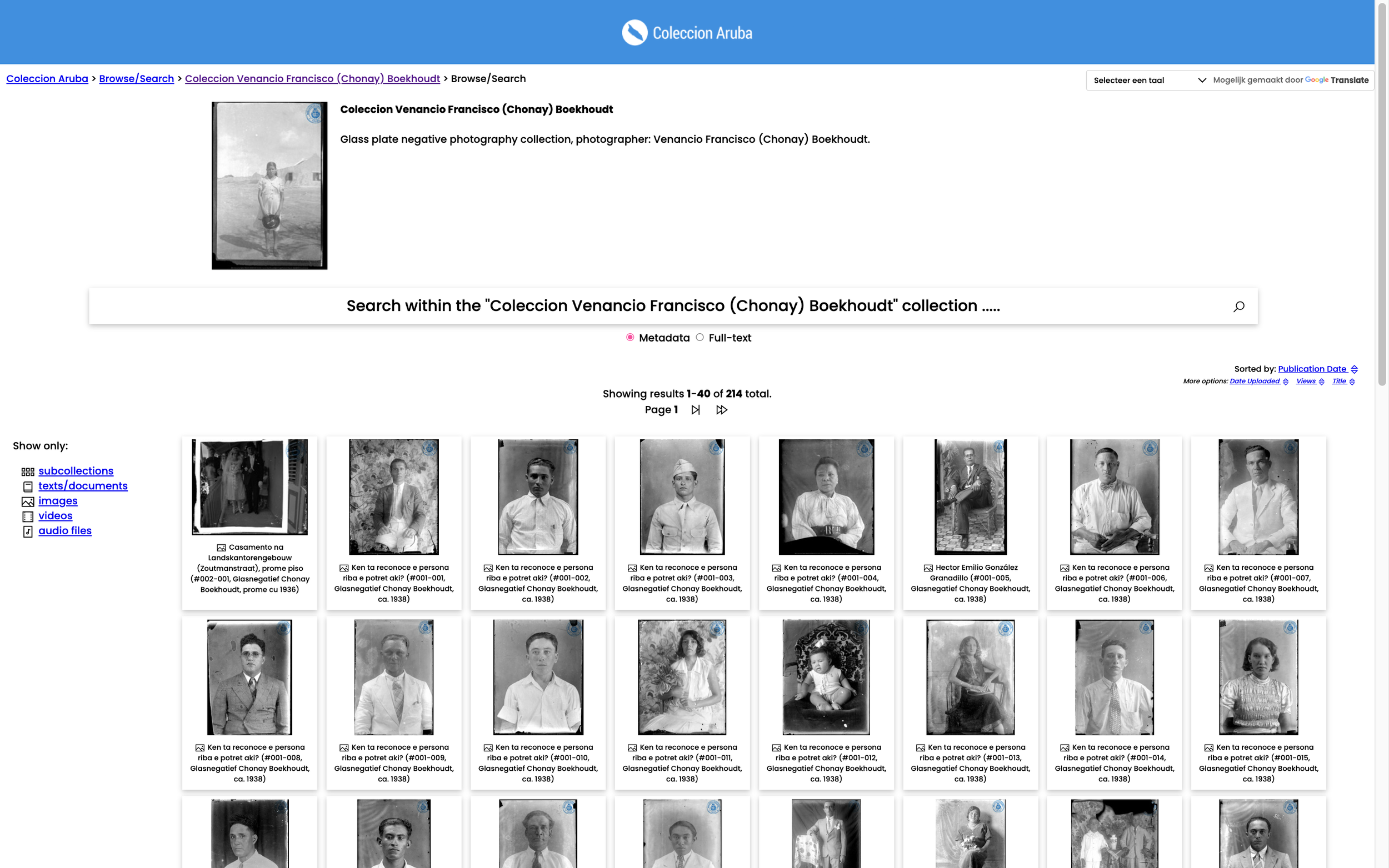
Imagen 4. Screenshot di e coleccion di retratonan (∼1938) di fotografo Arubiano, Venancio Francisco (Chonay) Boekhoudt. E coleccion ta parti di Aruba su herencia nacional, digitalmente obtenibel riba di Coleccion Aruba. https://coleccion.aw/browse/?col=chonayboekhoudt, accesa 3 maart 2026.
ENG: Screenshot of the portrait collections (∼1938) by Aruban photographer Venancio Francisco (Chonay) Boekhoudt. The collection is part of Aruba's national heritage, digitally available on Coleccion Aruba's digital collection. https://coleccion.aw/browse/?col=chonayboekhoudt, accessed 3 March, 2026.
E ESENCIA DI "LOCAL"
Bayendo cas despues, mi a keda pensa riba e presentacionnan di awenochi.
E presentacion di Rudyomar ta sinti familiar. E ta corda mi di e glasnegatief saca rond di 1938 pa e fotografo Arubiano, Venancio Francisco Boekhoudt, mihor conoci como Chonay. Chonay tabata saca retrato di esnan bibando na y bishitando Aruba. Den su coleccion di retrato te personanan ta sintá riba un stoel of pará. Cada potret tin diferente background (mira Imagen 4).
E tempo aya, saca potret no tabata un acto rapido. Mi ta imagina cu e persona mester keda sinta keto den su stoel, mientras Chonay ta prepara pa saca nan potret. Den blanco cu preto. Chonay su acto por ser mira como un practica di archiva. Archivando e antepasadonan bibo ("living ancestors") na e momento ey, na Aruba. Similarmente cu Chonay, por medio di e acto di pinta retrato, Rudyomar ta archivando esnan den e stoel preto su dilanti. Esnan na Aruba. Cu e "local-dad" aki kisas Rudyomar ta purba di contesta riba e pregunta principal "kico ta local?" E local ta den e ripiticion di e acto di archiva en bibo. E acumulacion di e actonan pa archiva.
Dimanche y Sharina a investiga "local" den un otro angulo: local ta e suma di tur e deferencianan hunto: e diferente telanan cu tabata colga den e shap, pregunta haci na nos riba e cartonnan den color neon. Esaki a duna oportunidad pa e bishitante refleha y explora hunto cu e artistanan.
"Local" no ta monotono, no ta un cos so. Ta e diferente hende y ambientenan riba e isla cu ta haci Aruba e pais cu e ta. Por ehempel, metaforicamente, e diferente tono musical ta forma un composicion di un cantica completo. "Local" no ta solamente un manera di expresa, un manera di ta of haci. Ta exactamente e diferencianan cu ta existi pa centenario na Aruba ta locual ta forma e concepto y comprendimento di kico ta local.
Cu e obra di Ginelly y Rudberth por a observa cu e local ta e raiznan den e tera. Raiz kisas literalmente di mata, pero principalmente figurativo: esnan cu a nace, crece y biba den e bario ta trece nificacion na "local". E dialogo entre e artistanan den e video ta trece dilanti con raiznan di Palm Beach a wordo ranca drasticamente di e tera den tempo cortico. Haciendo espacio pa raiznan instabil y invasivo pa e habitante ––e hende, e flora, e fauna, e funginan –– di e bario. E rancamento y reemplaso di raiz ta trece na cla kico ta e esencia di "local", e atencion pa "local", e necesidad di "local".
E bario di Palm Beach cu Rudberth ta recorda, ta un subculturanan di Aruba cu ta forma parti di tur e culturanan hunto. Pues, mi ta puntra mi mes: si e raiznan nostalgico cu Rudberth ta recorda, no a wordo ranca y reemplasa, lo nos a para keto y refleha di kico ta local y e balor cu e tin pa Aruba? Si e Palm Beach nostalgico ta un subcultura cu ta bayendo perdi, e Palm Beach contemporaneo cu ta lantando tambe ta un subcultura? Pues, un subcultura cu tambe ta forma e cultura di Aruba den e momento y espacio aki? Manera e cantante Colombiano Juanes ta canta den su cancion "Un día normal":
"Porque nunca sabes lo que tienes,
hasta que lo pierdes.
Lamentablemente nunca vuelve."
Of, toch si?
Tur tres presentacion a refleha na diferente manera kico "local" ta nifica pa e artistanan. Si mi pensa atrobe riba e palabra "local", mi ta pensa tambe riba localidad; un lugar. Pa e artistanan, "local" su esencia ta e coleccion of suma di e diferente aspectonan aki na Aruba, por ehempel e suma di acto, diferencia of nostalgianan. Usando e palabra "local" den combersacion y lenguahe di tur dia, ta haci e palabra tin un peso similar cu otro palabranan den un frase. Pues, no ta un palabra cu mi/nos ta para keto na dje tur dia y investig'e. Ta exactamente esaki e artistanan a haci. Duna contexto den nan manera di pensa y nan experiencia di bida; dunando e cosnan di tur dia un otro perspectiva.
Skirbi pa Ichmarah Kock
3 maart 2026
﹏𓇼 ⋆.˚ ꩜⋆.˚ 𓇼﹏
Si bo a yega te na final di e texto, pone un emoji di 🪩 (disco ball) riba Instagram, asina mi sa cu bo a pasa kibanda tambe :)
Download y lesa e articulo den formato PDF: https://archive.org/details/pero-kico-realmente-ta-local-ichmarah-kock-2026
[English]
[Title translation by author: "But, what really is local??"]
Initially, this reflection was part 1 of 2, written about the program STUDIO 2025 at the Artistic Residence Aruba (RAA!). Unfortunately, I did not attend the final exhibition "Aki" in January 2026. The flu and fever knocked on my door, so I couldn’t write part 2 🥲
1. A stew dish, 2. the Santa Rosa market, 3. or the mango trees in my aunt's yard, 4. not forgetting the masbango that my grandmother used to buy when she was alive, near Wan Por in the Palm Beach neighborhood. Since the Cadushi Festival event that promoted the slogan "buy local", I started paying more attention to this topic. I often associate "local" directly with shopping. What is the meaning of "local" beyond shopping, business, or monetary value?
With curiosity, I attended a meeting of a group of artists who were exploring what is local in the context of Aruba in November 2025. The exploration was part of the STUDIO 2025 program at the Residencia Artístico Aruba (RAA!). RAA! is a space and collective in Aruba with the motto "where art matters." It is located at Caya G.F. Betico Croes 110, opposite Djiespie's Place. During the meeting, the artists presented their process of exploration on the topic of "local." Entering the gallery of the building, Desiree from RAA! approaches me and explains the concept of the meeting that night. Each group of artists will have fifteen minutes to present their process to us, the visitors. It starts at eight o’clock sharp!
RUDYOMAR LEYSNER
When eight o’clock strikes, Desiree leads us to the first presentation by artist Rudyomar Leysner, who sits in a corner on the right side of the gallery. Desiree informs us that we are not allowed to talk to the artist. Rudyomar has a few minutes to sketch a picture on a small piece of paper. He will sketch the person who sits in front of him on a black office chair on wheels. Behind the chair hangs a light brown background. With his hand, Rudyomar makes an inviting gesture for me to sit on the black chair. In one hand, he holds his Dixie cup filled with black ink; in the other, an ink pen. He starts sketching my portrait. Gradually, the silhouette of my face and glasses becomes visible on the small white paper. The background he paints completely black.
A few minutes later, Desiree indicates to Rudyomar that his time has passed. With surprise on his face at how quickly the minutes went by, Rudyomar stands up and sticks the paper with my portrait on the wall next to the window of the gallery. Now my face is part of the other portraits he has painted and pasted on the wall. The next visitor may sit in the black chair. And so, the process of portraiture begins again (see Imagen 1).
DIMANCHE JOLIE AND SHARINA GUMBS
Fifteen minutes have passed, and we are invited to go into RAA!’s garden. Next, the artists Dimanche Jolie and Sharina Gumbs will give their presentation. Entering the garden, you can hear a lovely soca playing. Dimanche Jolie stands behind a long table, pouring a dark green liquid into several Dixie cups. Sharina takes the cups from Dimanche Jolie and shares them with us (see Imagen 2).
"Bush tea" is what we’re drinking. A mixture of different herbs steeped in hot water. Someone asks what herb was used. It’s too hot and humid outside for me to concentrate fully. I cannot pay attention to what combination of herbs they used. With each sip of the bush tea, I am transported to a nostalgia of putting my feet down in moist soil. Touch the grass, touch the ground... However, at the same time, the hot tea combined with the heat and humidity in RAA!’s garden feels a bit uncomfortable. Kind of suffocating, honestly.
Sharina invites us to enter the roofed space at the back of the garden. It looks like an old shed. From ceiling to floor, different fabrics hang. Fabrics in different colors, textures, and patterns. It feels like we are entering a labyrinth! Although the shed is small, the artists have left a bit more open space at the back, without fabric. Here, they’ve stuck several neon-colored cardboards on the walls. Each cardboard has a handwritten question in black marker. We, the visitors, can answer the questions by writing our responses on post-its and sticking them next to each corresponding question:
WHAT MAKES SOMEONE TRULY BELONG TO ARUBA (NOT JUST BORN HERE, BUT BELONG HERE)
CAN INDIVIDUALITY AND COMMUNITY EXIST TOGETHER? WHAT DO YOU BELIEVE?
WHEN ARUBA IS PORTRAYED IN TOURISM OR MEDIA DO WE SEE ALL OF OUR FACES?
JEANELIJ (GINELLY) QUANT AND RUDBERTH WOLFF
Again, fifteen minutes have passed, and we are guided out of the labyrinth back inside. The last performance will be by the artists Jeanelij (Ginelly) Quant and Rudberth Wolff. Through the garden, we enter back into the gallery, toward the space in the middle of the RAA! building. There are some comic-style elements hanging from a fishing line attached to the ceiling. At first, the elements look like a set of eyes; at the same time, they look like fish figurines too. There are also several signs with texts hanging from the ceiling:
CAPTURE BE PART OF YOUR NEIGHBORHOOD
COEXIST
SEE WHERE YOU’RE GOING
WHERE YOU COME FROM
HIGH WALLS
SEEK CONNECTION WHO’S OUTSIDE?
BE PART OF YOUR NEIGHBORHOOD
A TV screen sits on a table on the east side of the space. The room is filled with wooden folding chairs (see Imagen 3, page 5). We take our seats. The artists introduce themselves, followed by the demonstration of a reflective video they made. In the video, we follow the two artists walking in the neighborhood of Palm Beach. Rudberth grew up in the neighborhood, while Ginelly did not. The two talk and reflect on the disadvantages mass tourism has brought to Aruba. Many former residents of Palm Beach have been replaced by temporary visitors, the tourists.
Ginelly notes the high garden walls surrounding the houses in the neighborhood: before, you could see the street from your house, your neighbors, and make conversation with each other. Now you don’t even see the house itself anymore because of the high walls. Rudberth reflects that only one street still represents what Palm Beach was before it changed drastically. The street with the colorful houses, where Palm Beach fisherman Wan Por sells his fish under a tree. That is, if he managed to catch fish that day. A fragment of the video shows Wan Por’s sign under a tree, with large letters reading "NO TIN PISCA," there is no fish. Rudberth explains in the video that the sign is what makes the neighborhood precisely the neighborhood of Palm Beach: the inhabitants, with their roots anchored in the area. They shaped the neighborhood for years.
At the end of the video, we could ask questions to the artists and join in discussion with each other. After the video and conversations, the atmosphere feels a little emotional. A sense of loss for what is left of our Aruba.
THE ESSENCE OF "LOCAL"
Going home after the presentations, I kept thinking about what I witnessed tonight.
Rudyomar’s presentation feels familiar. It reminds me of the glass negative photographs taken around 1938 by the Aruban photographer Venancio Francisco Boekhoudt, better known as Chonay. Chonay took pictures of both locals and visitors in Aruba. The people in his collection of portraits were sitting on a chair or standing, each photograph with a different background (seeImagen 4, page 6).
At that time, taking pictures was not a quick act. I can imagine the person had to sit still in the chair while Chonay prepared to take the picture. In black and white. Chonay’s act can be seen as a practice of archiving people in Aruba in the moment: archiving the living ancestors of that time on the island. Similar to Chonay, through the act of painting portraits, Rudyomar is archiving those who sit in the black chair in front of him. The people of Aruba.
What is local is liminal. The repetition of the act of live archiving. The location at the moment is also part of the act of archiving. With this "locality," perhaps Rudyomar is trying to answer the main question: "What is local?" It’s all about the accumulation of archival acts.
Dimanche and Sharina’s presentation investigate "local" from another angle: local is the sum of all the differences together. All the different fabrics hanging in the shed, the questions on the neon cardboards. These gave us, the visitors, an opportunity to reflect and explore together with the artists.
"Local" is not monotonous, not just one thing. It is the different people and environments on this island that make Aruba the country it is and is becoming. For example, metaphorically, different musical tones form the composition of a whole song. "Local" is not just a way of expressing, being, or doing. It is exactly the differences that have existed for centuries in Aruba that form the concept and understanding of what is local.
With the work of Ginelly and Rudberth, it can be observed that the local is rooted in the soil. Perhaps literal tree roots, but mainly figurative ones. Those who were born, grew up, and live in the Palm Beach neighborhood are the ones who bring meaning to "local." The dialogue between the artists in the video brings forward how the figurative roots here in Palm Beach have been drastically torn from the soil in a short time, making room for unstable and invasive roots that work against the habitants — people, flora, fauna, fungi — of the neighborhood. The uprooting and replacement of these roots bring to light what is the essence of "local", the attention to "local," the need for "local."
The Palm Beach neighborhood that Rudberth recalls is one of the many subcultures of Aruba that form part of all Aruba's cultures together. And then I wonder: if the nostalgic roots that Rudberth recalls had not been torn and replaced, would we have stopped and reflected on what is local and the value it has for Aruba? If the nostalgic Palm Beach is a subculture that is being lost, is the contemporary Palm Beach that is rising also a subculture? One that also shapes the culture of Aruba in this moment and space? As the Colombian singer Juanes sings in his song “Un Día Normal”:
"Porque nunca sabes lo que tienes,
hasta que lo pierdes.
Lamentablemente nunca vuelve."
(Because you never know what you have, until you lose it. Unfortunately, it never comes back.)
Or will it?
All three performances reflected, in different ways, what "local" means to the artists. If I think of the word by itself, I also think of location, a place. For the artists, the essence of "local" is the collection or sum of the different aspects here in Aruba. For example, the sum of actions, differences, or nostalgia. Using the word "local" in everyday conversation and language gives it a weight similar to other words in a sentence. So, it’s not a word that I/we reflection upon every day to examine and investigate. That’s exactly what these artists have done. Giving it context through their way of thinking and their life experiences; shifting how we see the everyday differently.
Written by Ichmarah Kock
3 March 2026
﹏𓇼 ⋆.˚ ꩜⋆.˚ 𓇼﹏
If you have read the text all the way, add a 🪩 (disco ball) emoji on the Instagram post; this way I know you were here too :)
Download and read the article in PDF format: https://archive.org/details/pero-kico-realmente-ta-local-ichmarah-kock-2026